


Parkside Residence
Brunssum
In the middle of a residential area in Brunssum stands a former office building that was used by a healthcare institution for many years. The building deviates in architecture, aesthetics and building volume from the surrounding semi-detached houses. Opposite the building, however, stands a large apartment block of approximately 12 floors, which also contrasts with the neighborhood. This extreme scale jump, from small houses to a substantial tower, formed the core of the transformation challenge.
''How can we transform and densify at the same time?''
The project was initially planned for 9 residential units. Research into the urban planning context made it clear, however, that additional volume would be logical. The buildings in the immediate surroundings already make this scale jump visible and call for an architectural response that
addresses this. The building therefore had to not only receive a new function, but also create a visual bridge between the different scale levels in the neighborhood.
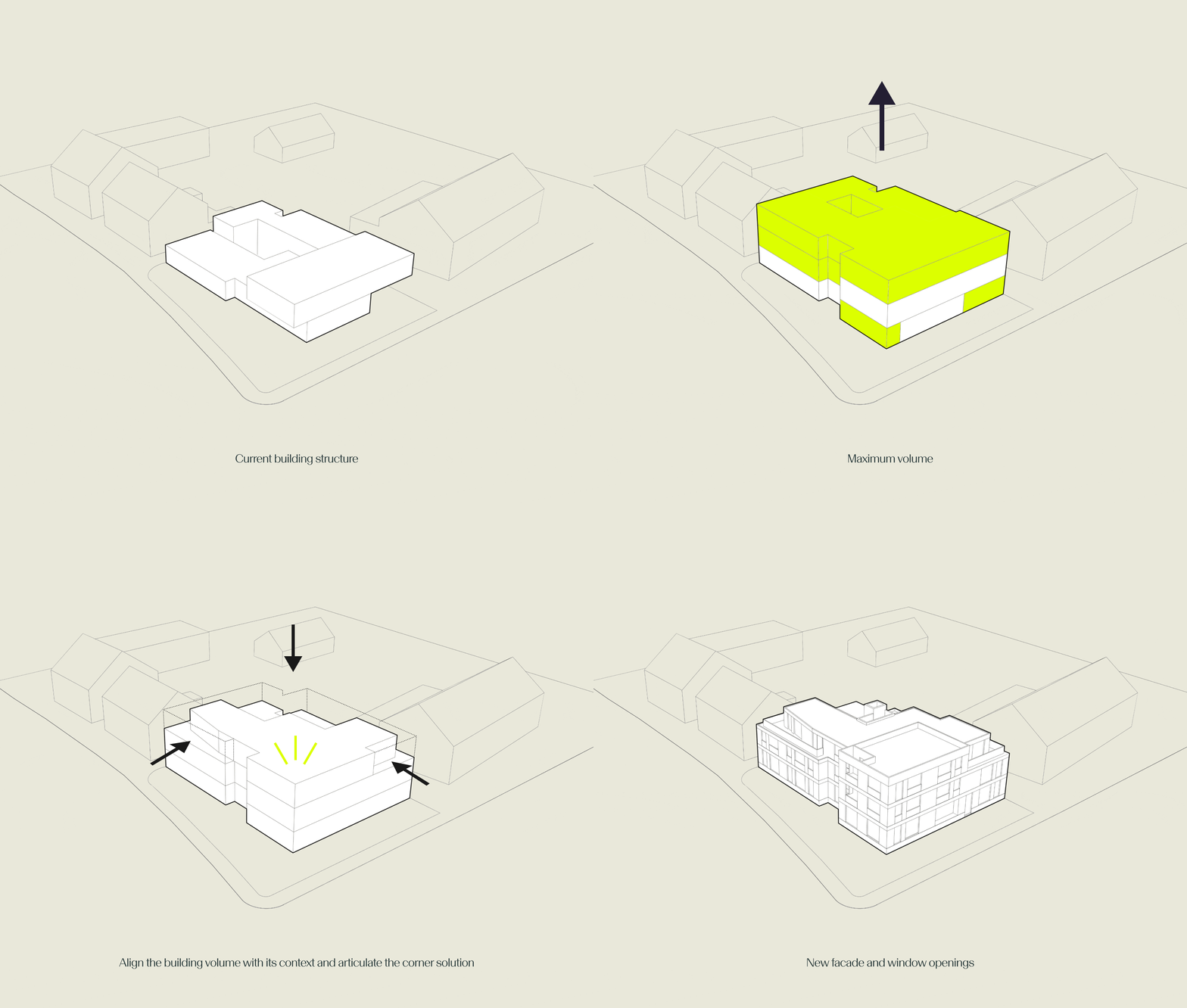
The main question was transforming the office building into lifetime-appropriate apartments. All apartments had to be single-level and fully wheelchair accessible, with an elevator for vertical access. The challenge lay primarily in dealing with this scale difference between the apartment block and the semi-detached houses. At the corner, where the building stands next to the apartment block, the volume could relate to that larger scale. Toward the semi-detached houses, however, a setback was chosen: a recessed facade that softens the transition and makes the building less dominant.
The design deliberately sought connection with the existing architecture of the building. The original plasticity, characterized by recesses, cantilevers and horizontal articulation, had to remain visible. This resulted in a design in which the existing cantilevers are translated into sloping facades that taper toward the side facades. This intervention creates additional depth and shadow effect, while the original structure remains legible because the recessed facade sections are positioned within the existing cantilevers.
The initial request was to transform the existing building into 9 residential units. Research into the scale jump and urban planning context, however, revealed more potential. This ultimately led to a transformation with 13 lifetime-appropriate residential units instead of the originally planned 9. These residential units respond to the aging population and the growing need for accessible housing in Brunssum.
Parkside Residence
Brunssum
In the middle of a residential area in Brunssum stands a former office building that was used by a healthcare institution for many years. The building deviates in architecture, aesthetics and building volume from the surrounding semi-detached houses. Opposite the building, however, stands a large apartment block of approximately 12 floors, which also contrasts with the neighborhood. This extreme scale jump, from small houses to a substantial tower, formed the core of the transformation challenge.
''How can we transform and densify at the same time?''
The project was initially planned for 9 residential units. Research into the urban planning context made it clear, however, that additional volume would be logical. The buildings in the immediate surroundings already make this scale jump visible and call for an architectural response that
addresses this. The building therefore had to not only receive a new function, but also create a visual bridge between the different scale levels in the neighborhood.
The main question was transforming the office building into lifetime-appropriate apartments. All apartments had to be single-level and fully wheelchair accessible, with an elevator for vertical access. The challenge lay primarily in dealing with this scale difference between the apartment block and the semi-detached houses. At the corner, where the building stands next to the apartment block, the volume could relate to that larger scale. Toward the semi-detached houses, however, a setback was chosen: a recessed facade that softens the transition and makes the building less dominant.
The design deliberately sought connection with the existing architecture of the building. The original plasticity, characterized by recesses, cantilevers and horizontal articulation, had to remain visible. This resulted in a design in which the existing cantilevers are translated into sloping facades that taper toward the side facades. This intervention creates additional depth and shadow effect, while the original structure remains legible because the recessed facade sections are positioned within the existing cantilevers.
The initial request was to transform the existing building into 9 residential units. Research into the scale jump and urban planning context, however, revealed more potential. This ultimately led to a transformation with 13 lifetime-appropriate residential units instead of the originally planned 9. These residential units respond to the aging population and the growing need for accessible housing in Brunssum.
Design process

Current building


